Methane Emissions from Oil and Gas in Canada: What the Data Says and What Operators Must Do Now
Canada is the co-convenor of the Global Methane Pledge. It was the first country to commit to reducing methane emissions from oil and gas by 75% below 2012 levels by 2030. In June 2025, it shipped its first LNG cargo from Kitimat, British Columbia, to Asia — positioning itself as a climate-responsible energy exporter at a moment when buyers in Japan, South Korea, and Europe are paying close attention to exactly how that gas was produced.
The problem is that the numbers behind that positioning are under serious pressure. Direct measurements conducted across Canada’s major producing regions consistently show actual fugitive methane emissions running between 1.5 and 17 times above what operators report in official inventories. Saskatchewan alone emits nearly 20% of its produced gas into the atmosphere. Nearly 500,000 inactive wells across Alberta and Saskatchewan are leaking at rates seven times higher than current government estimates. And the Enhanced Methane Regulations finalized in December 2025 now create enforceable compliance obligations that factor-based reporting methods cannot reliably survive.
Methane emissions from oil and gas in Canada are not a future problem to be managed. They are a present-day exposure that operators are already carrying — whether or not they have measured it. SkyIntelGroup works with oil and gas producers across Canada to deliver the independent satellite-based monitoring that turns that exposure into a manageable, documented, and defensible compliance record.
The Real Scale of Methane Emissions from Oil and Gas in Canada
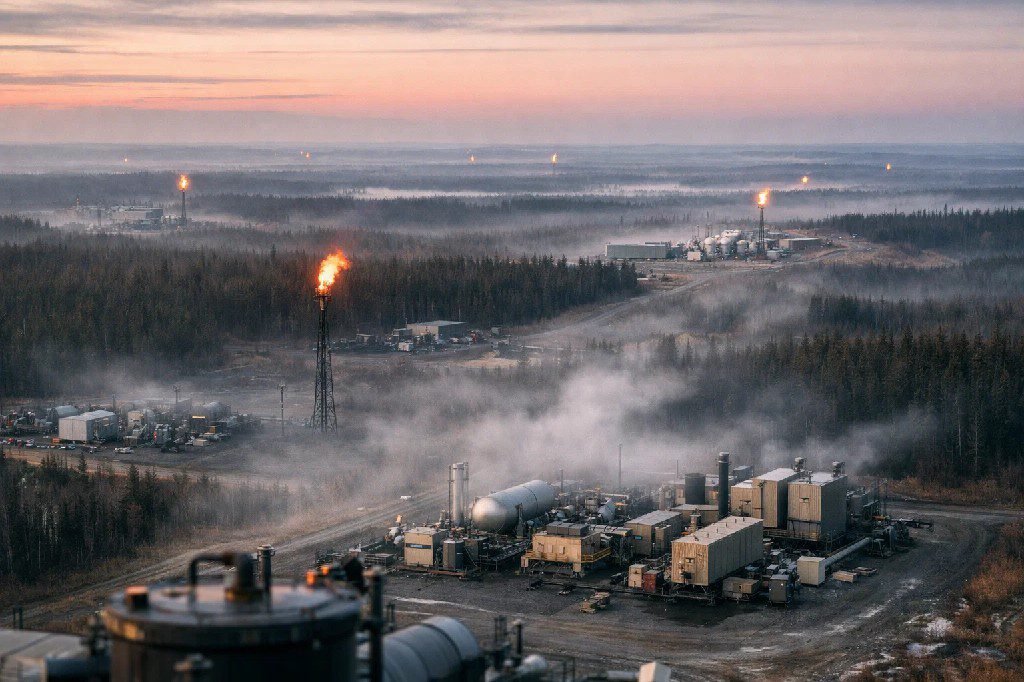
The gap between what Canada’s oil and gas sector reports and what direct measurements find is not a rounding error. It is a structural problem rooted in how most operators still estimate their emissions — using standardized factors applied to production volumes and equipment counts, a method that consistently underperforms when measured against atmospheric data.
A peer-reviewed study published in Communications Earth & Environment found that methane emissions from upstream oil and gas operations in Alberta are approximately 1.5 times the official federal inventory. The same study found that venting — from uncontrolled tanks, pneumatic devices, and unlit flares — accounts for nearly two-thirds of actual emissions, while appearing as a far smaller fraction in reported data. The discrepancy is not that operators are lying. It is that the estimation method misses the sources that matter most.
At the regional level, the gaps are far more severe. Airborne measurements near Red Deer, Alberta — an area characterized by natural gas and light oil production — found methane fluxes more than 17 times higher than figures derived from directly reported industry data. Near Lloydminster, on the Alberta-Saskatchewan border, the same measurement approach found fluxes five times higher than reported. These are not projections or models. They are what scientific instruments measure when they fly over the fields.
Saskatchewan presents the most extreme documented case. Direct measurements show the province emitting nearly 20% of its produced gas into the atmosphere — ten times the national average for methane leakage rates in oil and gas production. The variability is not geological. Provinces with similar geology and similar production profiles show dramatically different emission intensities depending on the stringency of their regulations and the frequency of their monitoring.
Canada itself acknowledged the scale of the problem in 2024, when it updated its national inventory methodology to incorporate more measurement-based data. The result: reported fugitive methane emissions from oil and gas increased by more than 35% overnight — not because emissions grew, but because the previous method had been systematically undercounting them.
The 500,000 Wells Nobody Is Monitoring
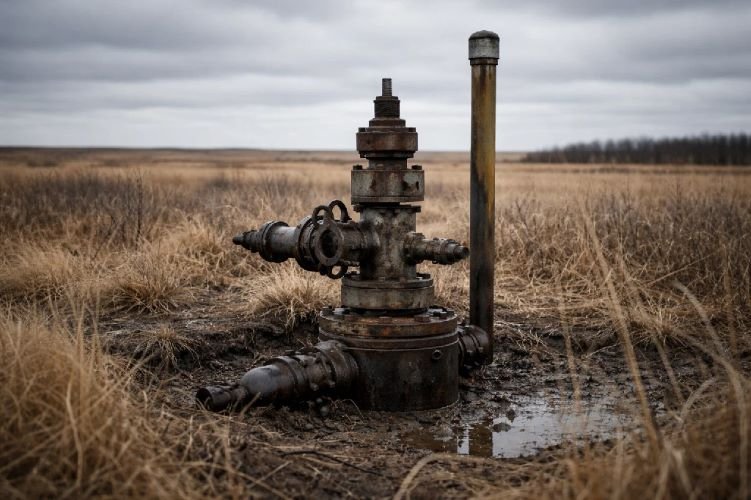
There is a second methane problem in Canada that sits underneath the first one — literally. The country has approximately 500,000 non-producing oil and gas wells, of which 74% are concentrated in Alberta. These are wells that are no longer generating revenue, but many of them are still generating emissions.
A 2025 study published in Environmental Science & Technology by researchers at McGill University compiled 678 direct methane measurements from 494 non-producing wells across five provinces. The finding: methane emissions from abandoned and inactive wells in Canada are underestimated by a factor of seven. One in every 20 unplugged wells qualifies as a super-emitter — releasing methane at rates above the 100 kilograms per hour threshold used by the EPA to define a reportable event.
The leakage pathway matters as much as the volume. Surface casing vent flows — uncontrolled gas migration through the wellhead assembly — account for between 75% and 82% of emissions from abandoned wells. These are not slow seeps. In Grande Prairie, Alberta, an area of high fracking activity, abandoned wells leaked at rates 13 times higher than those found near Medicine Hat — same province, very different outcome.
The regulatory implications are direct. Canada’s Enhanced Methane Regulations now require operators to report emissions from inactive and temporarily plugged wells by May 2026 and to submit mitigation plans for remediating and permanently plugging them. An operator with a portfolio of inactive wells across Alberta who has never measured which ones are emitting — and at what rate — is now required to have that information.
The practical challenge is that visiting 500,000 wells individually is not operationally or financially feasible. What is feasible is satellite analysis of the concession area — identifying which zones show spectral anomalies consistent with methane emission, so that ground teams go to the right wells first instead of sampling randomly across a province-sized asset base.
What Canada’s Enhanced Methane Regulations Actually Require
The regulations that mattered before December 2025 required a 40–45% reduction from 2012 levels by 2025. Most of Canada’s major producing provinces met that target — partly through genuine emissions reductions and partly because better measurement methods subsequently revealed the baseline had been underestimated to begin with.
The Enhanced Methane Regulations finalized on December 16, 2025, operate on a different scale. The new target is a 72% reduction from 2012 levels by 2030, with Alberta working toward a 75% reduction by 2035 under an equivalency agreement reached in principle with the federal government in March 2026. The regulations tighten requirements across every major source category — venting from pneumatic devices, fugitive emissions from equipment leaks, flaring practices, and for the first time, explicit reporting obligations for inactive wells.
For most operators, the shift that matters most is methodological. Meeting a 72% reduction target requires knowing where you started. An operator whose baseline is built on factor-based estimates that subsequent measurement has shown to be 1.5 to 17 times too low does not have a defensible baseline. When the regulator or an auditor asks what emissions looked like in 2024 and how they compare to 2030 projections, a factor-based answer creates a gap that grows more visible as the deadline approaches.
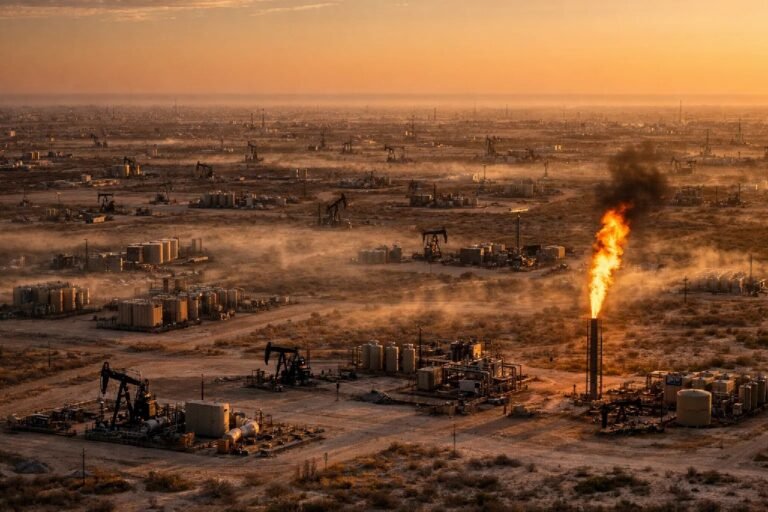
The regulations also respond to the Alberta-specific reality that venting is the dominant source — not leaks, not flaring, but intentional or uncontrolled releases from tanks, pneumatics, and unlit flares. These are addressable, but they require knowing where they are. A satellite analysis that maps the field against its own historical baseline identifies the venting hotspots that a periodic LDAR inspection by ground teams is likely to miss simply because it cannot be in every location every week.
LNG Canada and the Buyers Who Are Already Checking
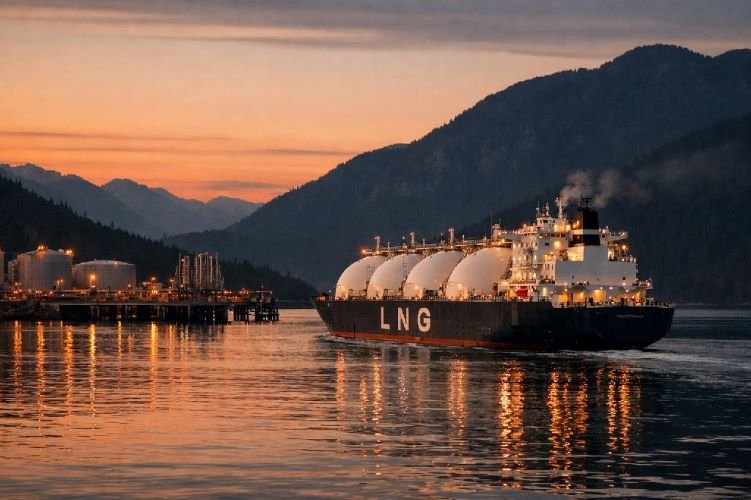
The domestic regulatory pressure is only half the picture for producers in British Columbia and northwestern Alberta. The other half arrived in June 2025, when LNG Canada loaded its first cargo at Kitimat and began shipping natural gas from the Montney Formation to Asia.
The Montney is genuinely one of the lowest-methane-intensity producing formations in North America. Direct measurements show emission intensities that compare favorably with the best-performing basins in the United States. That is a competitive advantage — but only if it can be demonstrated with data. A buyer in Japan or South Korea who is choosing between LNG suppliers cannot rely on a producer’s self-reported inventory estimate to justify a premium or a long-term contract. They need measured intensity, verified independently, covering the full upstream chain from wellhead to liquefaction terminal.
Japan strengthened its requirements for LNG import transparency in June 2025. South Korea has followed with similar steps. Both countries have importers signed on to the CLEAN initiative, which commits buyers to prefer LNG produced with verified low-methane intensity. Canada has taken over from the United States as co-convenor of the Global Methane Pledge — which means Canadian LNG producers are now effectively the face of the pledge’s credibility in the Asian market.
For any producer whose gas feeds LNG Canada — or any of the additional terminals under construction at Kitimat and Squamish — the ability to produce verified methane intensity data is no longer a sustainability aspiration. It is a commercial requirement that buyers are beginning to enforce through contracting terms.
The EU side of the picture is equally clear. The EU Methane Regulation requires importers to demonstrate MRV equivalence for all supply contracts signed since August 2024, with the first hard compliance deadline in January 2027. If Canadian LNG reaches European regasification terminals — which it does and will — the producer’s OGMP 2.0 compliance status and measured intensity data become part of the commercial conversation.
What Operators in Alberta, BC, and Saskatchewan Need to Do Now
The path from where most Canadian operators are today — reporting on factor-based estimates, without a field-wide measured baseline — to where the Enhanced Methane Regulations and export market buyers require them to be is not technically complicated. It requires measurement infrastructure that operators do not currently have in place, and it requires starting before the deadlines make the gap public.
The fundamental problem with factor-based estimation is not that the factors are wrong everywhere. It is that they are averages applied to situations that are not average. The Red Deer region is not the Lloydminster region. A well pad with a malfunctioning pneumatic device emitting continuously is not the same as one with equipment operating to spec. An abandoned well venting through a surface casing vent at Grande Prairie is not captured by the same factor as one near Medicine Hat. Averages hide the outliers, and in methane management, the outliers are where almost all the actual emissions are coming from.
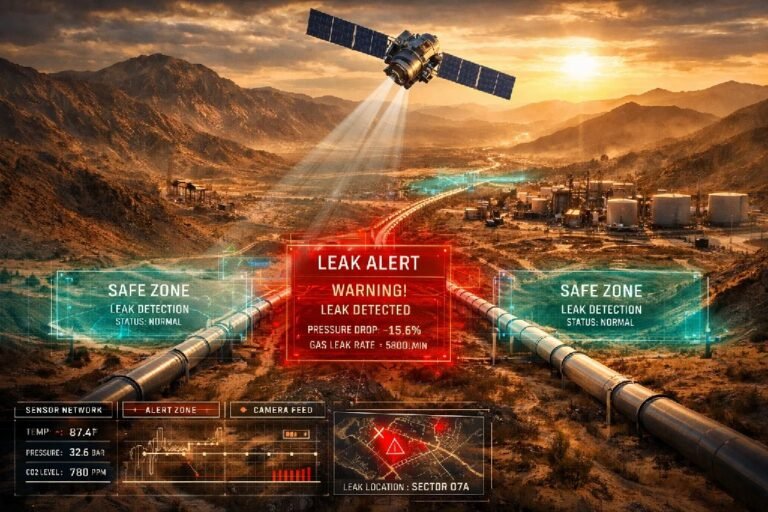
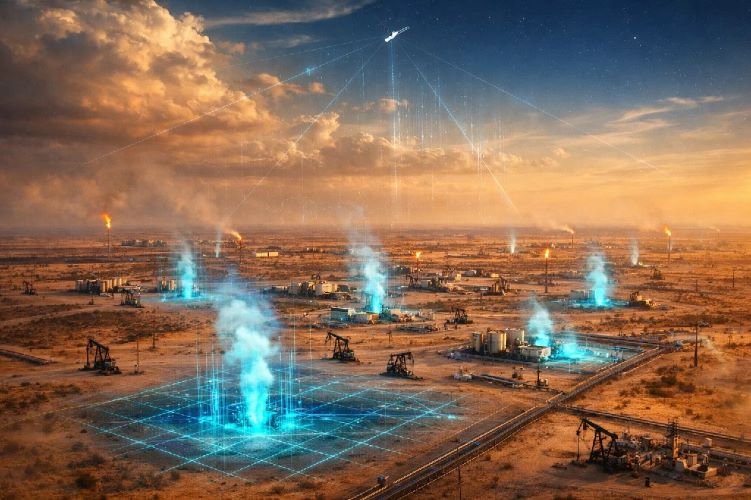
Satellite analysis addresses this problem by looking at the field as a whole rather than sampling it in pieces. SkyIntelGroup processes satellite imagery of a production area against its own historical baseline — identifying zones where the spectral behavior of the atmosphere has shifted in ways consistent with elevated methane, and mapping those zones at the level of detail that directs ground teams to the right location. For an operator in Alberta with active production across a large concession, this means knowing which parts of the field to prioritize for LDAR before the inspection campaign — not discovering the problem during the inspection or after a regulator’s satellite system identifies it first.
For producers in the Montney Formation supplying LNG Canada, the same analysis builds the measured intensity record that Asian and European buyers are beginning to require. For operators with portfolios of inactive wells in Alberta or Saskatchewan, it identifies which zones need ground verification before the May 2026 reporting deadline. For producers in Saskatchewan whose methane leakage rates are documented at ten times the national average, it establishes a measured baseline from which actual reduction can be tracked and demonstrated.
The full scope of satellite intelligence services SkyIntelGroup delivers for oil and gas operators — including pipeline monitoring, ground subsidence, and right-of-way surveillance — is available on the Oil, Gas & Energy services page. For operators specifically focused on methane monitoring, our guide to methane emissions from oil and gas operations globally covers how satellite detection works and what regulatory frameworks accept as verified evidence.
Frequently Asked Questions About Methane Emissions from Oil and Gas in Canada
What are Canada’s Enhanced Methane Regulations and what do they require?
The Enhanced Methane Regulations, finalized in December 2025 under the Canadian Environmental Protection Act, set a target of 72% reduction in oil and gas methane emissions below 2012 levels by 2030. They replace the previous 40–45% target that most provinces had already met. The new regulations tighten requirements on venting from pneumatic devices, equipment leak detection and repair, flaring management, and — for the first time — explicit reporting obligations for emissions from inactive and temporarily plugged wells. Alberta is working toward a separate equivalency agreement that targets 75% reduction by 2035, with the federal regulations applying in the interim. Operators who have been meeting the previous targets through factor-based reporting will need to build more rigorous measurement programs to demonstrate compliance with the new framework.
How much are Canada’s actual methane emissions compared to what is officially reported?
The gap varies significantly by region, but the direction is consistent: actual emissions are higher than reported figures at every scale that has been independently measured. Nationally, Canada’s upstream oil and gas methane inventory is estimated to be underestimated by a factor of approximately 1.5. At the regional level, airborne measurements in the Red Deer area of Alberta found emissions 17 times higher than directly reported industry data, and measurements near Lloydminster found emissions five times higher. When Canada updated its national inventory methodology in 2024 to incorporate more measurement-based data, reported fugitive emissions increased by more than 35% — not because emissions grew, but because the previous method had been systematically missing key sources.
Why are Saskatchewan’s methane emissions so much higher than other provinces?
Saskatchewan emits nearly 20% of its produced gas into the atmosphere, roughly ten times the national average for methane leakage from oil and gas production. The primary driver is not geology — it is the combination of heavy oil production with sand, a process that generates exceptionally high venting volumes, and historically weaker provincial regulations compared to Alberta and British Columbia. Research has consistently shown that differences in emission intensity between provinces track regulatory stringency and monitoring frequency more closely than they track geological or production characteristics. Saskatchewan’s situation is the clearest demonstration in Canada that the gap between what is emitted and what is reported is primarily a measurement and enforcement problem, not a production problem.
What are inactive wells and why do they matter for methane compliance?
Inactive or non-producing wells are wells that are no longer generating oil or gas but have not been permanently plugged and abandoned. Canada has approximately 500,000 such wells, with about 74% located in Alberta. Research published in 2025 by McGill University found that methane emissions from these wells are underestimated by a factor of seven, and that one in every 20 unplugged wells qualifies as a super-emitter. The Enhanced Methane Regulations now require operators to report emissions from inactive and temporarily plugged wells by May 2026 and to submit plans for their permanent plugging. For operators with large portfolios of legacy wells spread across Alberta or Saskatchewan, identifying which wells are emitting significantly is a prerequisite for compliance — and satellite analysis can prioritize that ground verification at scale.
How does LNG Canada affect methane compliance obligations for Montney producers?
The connection is direct. Buyers in Japan and South Korea — the primary destinations for LNG Canada’s cargoes — are increasingly requiring verified methane intensity data from their suppliers. Japan strengthened its LNG import transparency requirements in 2025, and Korean importers have made similar moves through the CLEAN initiative. For producers whose gas feeds the Coastal GasLink Pipeline and the Kitimat terminal, the ability to demonstrate low and verified methane intensity is becoming a contracting requirement, not just a sustainability aspiration. The EU Methane Regulation adds a second layer: any Canadian LNG that reaches European regasification terminals must meet MRV equivalence requirements by January 2027. The Montney genuinely has among the lowest methane intensities in North America — but that advantage only translates commercially when it is backed by measured data.
Can satellite monitoring data be used to demonstrate compliance under Canada’s regulations?
Canada’s regulatory framework is increasingly accepting measurement-based data over factor-based estimates, which is the direction the Enhanced Methane Regulations are pushing the entire sector. Satellite data is accepted as a valid detection and quantification method in an expanding set of regulatory contexts, including the EU Methane Regulation’s MRV equivalence framework and the EPA’s Super Emitter Response Program in the United States. For Canadian compliance purposes, satellite analysis provides the field-wide baseline and temporal tracking that ground-based LDAR alone cannot deliver at scale. The most defensible compliance record combines satellite field-wide analysis with targeted LDAR ground verification — the satellite identifies where the problem is, and the ground team confirms and documents it at the equipment level.
What is the difference between Alberta’s methane regulations and the federal Enhanced Methane Regulations?
Alberta has had its own methane regulations since 2018, developed under equivalency agreements with the federal government that allowed the province to apply its own rules in place of the federal ones. The previous equivalency agreement expired in October 2025. Under the Canada-Alberta agreement reached in principle in March 2026, Alberta is working toward a 75% reduction target by 2035 — five years later than the federal 2030 target — through a performance-based approach that combines regulations, offset credits, and targeted investments. In practical terms, Alberta producers are currently operating under a transitional period while the new equivalency agreement is finalized. The federal Enhanced Methane Regulations apply in Alberta in the interim, meaning Alberta operators should be treating the federal 72% by 2030 target as the operative compliance standard until the provincial equivalency agreement is formally concluded.
Conclusions
Methane emissions from oil and gas in Canada present a specific kind of risk for operators: one that is growing more visible while many compliance programs remain built on methods that cannot see it clearly. The Enhanced Methane Regulations have raised the bar on what operators need to demonstrate. LNG export markets have raised the bar on what buyers need to see. And the satellite infrastructure now in orbit means that the gap between what is reported and what is actually emitting is shrinking — with or without the operator’s participation.
The producers who come out of this period in the best position are not necessarily the ones with the lowest emissions. They are the ones who know what their emissions are, can demonstrate that they are falling, and can show that record to a regulator or a buyer without having to reconstruct it under pressure.
For operators in Alberta sitting on portfolios of active production and legacy inactive wells, in the Montney supplying Canada’s first LNG export terminal, or in Saskatchewan where the documented gap between reported and actual emissions is the largest in the country — the window to build that record on your own terms is open now. SkyIntelGroup can help you start measuring before someone else does it for you.